Wine Diva Gnome: A Designer’s Real-World Embroidery Review
First Impressions: Charm with Intention
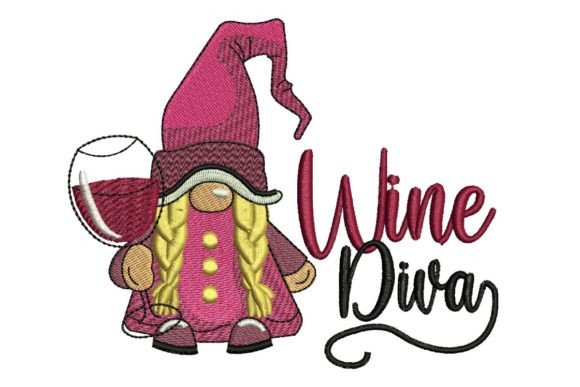
When I opened the Wine Diva Gnome embroidery file, I didn’t just see a whimsical character—I saw a clear design personality. It’s playful but polished, cheeky but elegant. The gnome wears a tiny wine glass, a beret tilted just so, and a soft smile that reads as confident, not cartoonish. There’s no visual clutter: clean outlines, balanced proportions, and intentional negative space around key features like the glass stem and facial details. As a designer who evaluates hundreds of machine embroidery designs each year, I immediately sensed this wasn’t just “cute”—it was *crafted* for real product use.
A Real Project Test: The Boutique Tote Bag Launch
Last week, I used Wine Diva Gnome on a limited-run batch of linen-cotton blend tote bags for a local wine shop’s summer pop-up. These weren’t craft fair giveaways—they were $48 retail items meant to feel handmade, thoughtful, and giftable. I chose a 4” hoop placement centered on the front panel, paired with medium-weight cutaway stabilizer and high-sheen polyester thread in deep burgundy and cream. The result? Crisp satin stitch on the beret, smooth fill stitch on the body, and just enough running stitch detail in the hair and glass rim to add texture without bleeding or puffing. Customers paused mid-aisle—not just because it was “wine-themed,” but because the Wine Diva Gnome looked *designed*, not stamped.
Where It Shines (and Where It Needs Thought)
The Wine Diva Gnome thrives in contexts where charm meets clarity. It’s ideal for:
- Sweatshirt embroidery—its rounded shape and moderate height (no tall verticals) avoids distortion on ribbed cuffs or curved hems;
- Embroidered patches—clean outer edges mean easy tear-away backing and sharp borders when heat-applied;
- Aprons and tea towels—the design’s open layout breathes well on textured weaves without overcrowding;
- Personalized gifts—it scales beautifully from 3.5” to 5”, making it flexible for baby onesies (with light stabilizing) or oversized pillow covers.
That said, I’d pause before using Wine Diva Gnome on ultra-thin fabrics like chiffon or stretchy performance knits without testing. The satin-stitched beret and glass base rely on stable tension—if your fabric shifts mid-stitch, those smooth curves can feather or pucker. And while it’s not overly dense, avoid layering it directly over seams or thick fabric folds (like cap crowns), where stitch buildup could stiffen the curve unnaturally.
Design Integrity Meets Customer Trust
Here’s what matters most to my clients—and to me as a small business owner: how a design affects perceived value. The Wine Diva Gnome elevates a simple tote or sweatshirt from “handmade” to “curated.” Its balance of detail and restraint signals care—not just in stitching, but in curation. When customers see that subtle highlight in the wine glass or the gentle curve of the gnome’s cheek, they don’t think “embroidery file.” They think “someone paid attention.” That builds trust faster than any product description.
For Etsy sellers and boutique brands, this is quiet professionalism. It doesn’t scream; it invites. That makes it strong for holiday embroidery (think gift-ready kitchen towels or wine-bottle sleeves), wedding favors (pair it with a monogrammed cork sleeve), or even nursery decor—yes, really. Swap the wine glass for a baby bottle in your mockup, and you’ve got an instant custom baby embroidery concept. The core structure holds.
Practical Designer Notes You’ll Actually Use
Before stitching Wine Diva Gnome into your next finished product, here’s what I do—and recommend:
- Test on scrap fabric first, especially if using dark thread on light fabric or vice versa—the contrast in the facial features and glass rim must read clearly;
- Review stitch density visually in your embroidery software: look for tight clusters near the beret edge or glass base—these areas benefit from a lightweight tear-away + cutaway hybrid stabilizer;
- Confirm hoop size compatibility: the design fits comfortably in a 5x7 hoop, but check your own machine’s usable area—some frames lose ¼” at the edges;
- Inspect small details at 200% zoom: the eyes are expressive but not micro-detail—ideal for commercial embroidery where consistency across dozens of pieces matters;
- Try black-and-white mockups before final thread selection: the design’s silhouette remains strong in monochrome, which helps with branding cohesion;
- Use proper stabilizer for your substrate: medium cutaway for cotton tees, lightweight fusible for linen, and avoid heavy stabilizer on baby clothes—let the Wine Diva Gnome’s inherent simplicity carry the piece;
- Verify licensing terms before selling finished items or bundling the digital embroidery file—it’s your responsibility as a craft business owner, not just a formality.
Final Thought: Not Just a Design—A Product Asset
The Wine Diva Gnome isn’t a novelty—it’s a versatile, commercially viable embroidery asset. It works because it respects both the machine and the maker: it stitches cleanly without excessive trims or color changes, and it gives the end product personality without demanding perfection. Whether you’re an apparel decorator building a summer collection, an Etsy seller refreshing your best-selling tote bag design, or a creative entrepreneur developing printable mockups for digital embroidery file listings, this design earns its place in your library. It’s fun, yes—but more importantly, it’s functional, trustworthy, and quietly sophisticated. That’s the kind of embroidery file that turns a project into a repeat customer.