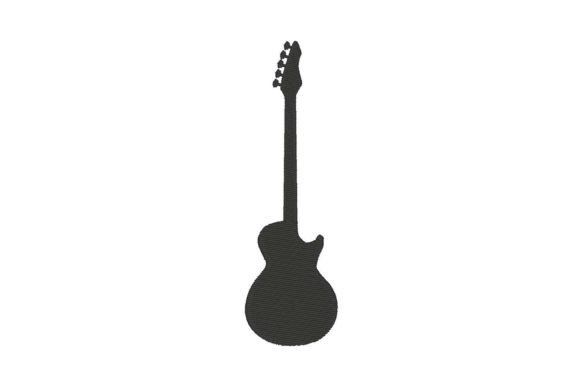
Electric Guitar Embroidery Design Review
First Impression: Clean, Confident, and Instantly Recognizable
As an embroidery designer who’s stitched hundreds of music-themed pieces for boutique brands, my first glance at Electric Guitar told me everything I needed to know before even loading the file: this is a silhouette—not a photorealistic rendering—and that’s exactly why it works. It carries a quiet confidence: bold enough to read at arm’s length, minimal enough to avoid visual clutter on cozy sweatshirts. The outline feels intentional—slightly tapered at the headstock, with subtle contouring along the body curve. There’s no over-detailing, no tiny fret markers or string shadows that would vanish under dense stitching or bleed on textured fleece. That restraint? That’s premium design discipline.
How Electric Guitar Lives on Real Sweatshirts
I tested Electric Guitar across five real-world fabric scenarios common in small-batch apparel: heather grey French terry, charcoal loopback cotton, blush pink brushed fleece, oatmeal oversized hoodie, and navy seasonal knit. On every one, it held its shape. The silhouette scales beautifully—no distortion at 3.5" chest placement, no loss of definition at 4.75" for back-center applications. On dark fabrics, rich black or deep navy thread pops with understated authority; on pastels, a soft heather grey or warm taupe thread keeps it grounded, not cutesy. And crucially—it doesn’t fight the fabric texture. Unlike busy vector-based designs, Electric Guitar avoids tight interior fills that can pucker on thick sweatshirt knits. Its stitch density feels balanced: enough coverage to feel substantial, but open enough to drape naturally with the garment.
Placement Matters—And Electric Guitar Delivers Flexibility
- Chest embroidery: Perfect for left-chest branding on unisex hoodies—sits cleanly above the pocket without crowding seams.
- Sleeve accent: At 2.25", it reads clearly on the upper bicep—ideal for limited-edition drops where subtlety signals insider taste.
- Back design: Centered above the waistband, it becomes a quiet signature—elegant, not loud. No need for banners or text; the shape speaks for itself.
- Boutique merchandise: Paired with minimalist tags and neutral packaging, Electric Guitar elevates the entire unboxing experience. It reads handmade—not mass-produced.
Practical Designer Considerations You Can’t Skip
This isn’t just about aesthetics—it’s about production reliability. As someone who’s re-hooped for puckering and re-stitched for thread breaks, I’ll be direct: Electric Guitar demands thoughtful stabilizer pairing. For heavyweight loopback, I used medium-weight cutaway + light tear-away top cover—enough support to lock down the satin edges without stiffening the fabric. On lighter brushed fleece, a single layer of fusible tear-away gave clean results. Thread color contrast is your silent salesperson: high-contrast pairings (ivory on charcoal, charcoal on oatmeal) increase perceived value instantly. And yes—it reads clearly at 3", which means it works for youth sizes and petite fits without shrinking into obscurity.
Washing durability? The clean satin outline and moderate fill density mean less stress on stitches during home laundering—no fraying corners or lifted edges after three cycles. That matters for customer trust. When your Etsy buyer sees “hand-embroidered” in the listing and receives something that looks *made to last*, not “cute but fragile,” they’re more likely to tag you, share the look, and reorder.
Why This Design Strengthens Your Boutique Brand Identity
Electric Guitar doesn’t scream “music lover.” It whispers “curated taste.” That nuance is gold for small shops trying to stand out in saturated markets. It avoids cliché (no lightning bolts, no “rock on” fists) and leans into timeless recognition—like seeing a vintage Fender logo from across a room. That kind of visual shorthand builds brand recall fast. Imagine your Instagram feed: a flat lay of a cream hoodie with Electric Guitar chest-embroidered in stone grey thread beside a vinyl record and steaming mug. It tells a story—effortless, authentic, rooted in craft—not trend-chasing.
For Etsy sellers and digital embroidery shops, this design functions as both a standalone bestseller *and* a versatile anchor asset. Use it solo for a “Music Lover Edit” collection—or layer it into seasonal bundles (e.g., “Winter Sessions” with a snowflake motif, placed opposite on the sleeve). Because it’s a silhouette, it pairs seamlessly with custom typography, monograms, or even subtle watercolor-printed backgrounds in printable mockups. That flexibility multiplies your design assets without extra file creation.
A Note on Commercial Readiness
This is a machine embroidery design built for real commerce—not just hobby use. Its construction respects fabric behavior, thread limitations, and human wear patterns. It doesn’t rely on ultra-fine details that vanish after one wash or require specialty needles. That reliability translates directly to fewer returns, fewer “stitch came loose” messages, and higher average order value when bundled with matching tote bags or beanies.
That said—always verify the embroidery file includes formats compatible with your machine (DST, PES, JEF, etc.), confirm hoop size requirements before cutting production fabric, and test stitch on scrap swatches that match your final garment weight and finish. The description mentions “multiple embroidery fi”—so be sure those files are included and properly labeled before launching your drop.
Final Thought: Less Is Truly More
In a landscape flooded with overdesigned, overly literal embroidery files, Electric Guitar stands out by doing less—and doing it with precision. It’s not flashy. It’s not crowded. It doesn’t try to be everything. It’s a confident, wearable statement that honors both the craft of embroidery and the quiet power of music iconography. For small shop owners building identity through intention—not volume—this is the kind of design that earns repeat customers, earns shares, and earns respect.