Realistic Eyeball Applique
First Impression: Bold, Unapologetically Halloween—Not Cute, Not Subtle
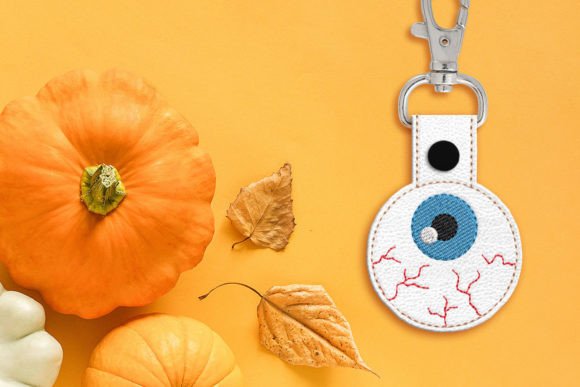
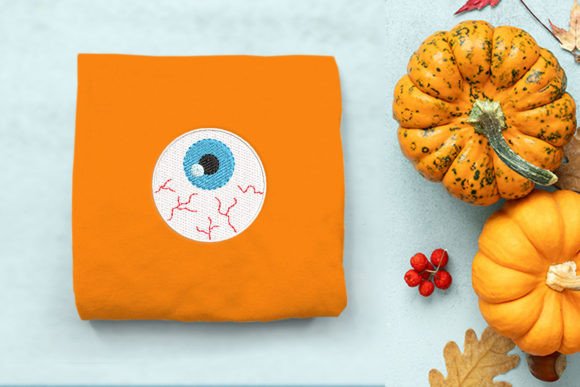
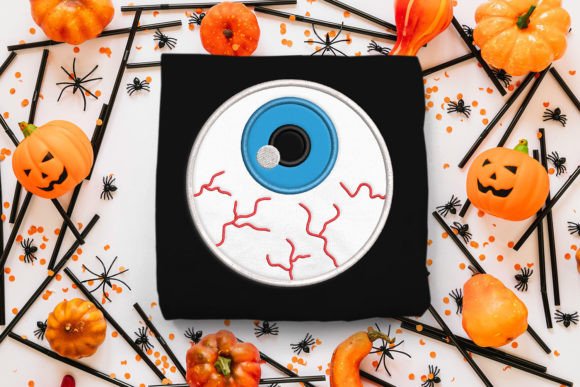
Let’s be real: the Realistic Eyeball Applique doesn’t whisper—it stares. Right back at you. From the title alone, it signals boldness, not whimsy. This isn’t a cartoon eye or a stylized “spooky” icon—it’s anatomically grounded, with iris detail, subtle veining, and a wet-sheen illusion built into the stitch layering. For craft fair sellers and Etsy sellers who thrive on memorable first-glance impact, that’s gold. It leans into *festival energy*, not farmhouse charm. It reads as modern, slightly irreverent, and deeply handmade—not mass-produced. That authenticity translates directly to booth traffic: people pause, point, laugh nervously, then ask, “Is that *real* thread?” Yes—and that conversation is your sales hook.
Where It Shines: Product-by-Product Reality Check
This design thrives where contrast and clarity meet intention. Here’s how it performs across common craft fair staples:
- Tote bag design: Best as a single focal applique on the front lower corner (5"–7" wide). Works brilliantly on natural canvas or black denim—high contrast makes the sclera pop. Avoid light gray or heathered fabrics unless you’ve tested thread brightness.
- Apron embroidery: A standout on the bib or pocket edge. Pair with black or deep burgundy fabric—adds instant personality without overwhelming function. Customers love “talking aprons,” and this delivers.
- Tea towel embroidery: Use only on smooth, tightly woven cotton (not terry or textured linen). Stitch density matters here—the iris detail can blur on loose weaves. Best placed centered near the top hem for easy viewing on display racks.
- Embroidered patch: Ideal size and structure. Trim cleanly, fuse or sew onto denim jackets, backpacks, or market bags. Its realism makes it feel premium—not novelty.
- Caps and curved surfaces: Proceed with caution. The pupil and iris require precise registration. Test on scrap caps first. Avoid low-profile fronts; aim for structured mid-crown panels where hoop pressure stays even.
- Fabric pouches & pillow covers: Strong performer—especially on dark velvet or matte-black cotton sateen. The depth of the design reads beautifully in person and photographs well for Etsy listings.
Production Practicality: What Makes or Breaks Your Batch
The Realistic Eyeball Applique is deceptively efficient: no tiny lettering, no micro-details smaller than 1.5mm, and no overlapping satin stitches that snag during trimming. But—crucially—it *does* rely on precise color sequencing. As the description warns: “Steps are separated by color changes. Please do not color sort or combine colors.” That means multi-needle machines must respect the programmed sequence—no auto-optimization. Skipping this risks misaligned irises or washed-out highlights.
It scales well between 3.5" and 6.5", but below 3", the pupil loses definition. Above 7", stitch density increases risk of puckering on lightweight fabrics. For craft fair prep, stick to one consistent size per product line—say, 4.75" for totes and patches, 5.25" for aprons—to streamline hooping and reduce setup time.
Careful-Use Notes: Protect Your Reputation (and Your Machine)
Don’t assume it’s “just another Halloween design.” This one demands attention to material science:
- Avoid dense, napped, or highly textured towels—the design’s realism collapses in fuzz.
- On dark fabric, confirm thread contrast *before* stitching. Some “white” threads dull on charcoal; test with high-luster polyester or rayon.
- Dense stitch areas (iris rim, pupil outline) need medium-weight cutaway stabilizer—especially on knits or stretchy pouch fabrics.
- Never skip the scrap test—even if you’ve used the file before. Fabric batch variations, humidity, and needle wear change outcomes.
Booth & Buyer Impact: Why It Converts at Craft Fairs
In a sea of pumpkins and ghosts, the Realistic Eyeball Applique stands out because it feels *designed*, not templated. It elevates a simple tote into a collectible. Buyers don’t just see “Halloween”—they see craftsmanship, confidence, and creative risk. That perception lifts price tolerance: $38 for an eyeball-adorned apron feels justified when the detail holds up under close inspection.
For Etsy sellers, it’s a visual anchor—pair it with strong printable mockups showing multiple products (tote + patch + pillow) using the same design. That builds cohesion and encourages bundle sales. And yes—it photographs exceptionally well with directional lighting that catches the satin-stitched cornea sheen.
Designer-to-Designer Must-Dos Before You Stitch
- Test the machine embroidery design on your *exact* production fabric—not generic muslin.
- Verify thread colors against your brand palette. Does “iris blue” match your navy? Does “sclera white” read clean next to your cream tea towels?
- Review spacing: ensure at least 0.25" clearance from seams, hems, or zippers on pouches and caps.
- Confirm hoop size compatibility—some versions may require a 5x7" minimum. Don’t discover this mid-booth setup.
- Inspect stitch density in the pupil—over-stitching causes stiffness; under-stitching sacrifices realism.
- Use appropriate stabilizer: cutaway for stretch, tear-away for stable wovens, and avoid fusible web alone for heavy coverage.
- Create *one physical mockup* before bulk production—even if it’s just a single embroidered patch pinned to your booth banner. Real-world context reveals what screens hide.
- Double-check commercial licensing. If selling finished products, ensure your digital embroidery file license permits resale of the finished product, not just personal use.
Final Thought: It’s Not Just Halloween—It’s Your Handmade Signature
The Realistic Eyeball Applique isn’t seasonal fluff. It’s a statement piece that tells buyers: *You’re buying from someone who cares about detail, respects technique, and isn’t afraid to stand out.* In a crowded handmade market—whether at a local craft fair or on Etsy—it doesn’t blend in. It belongs on your best tote, your most giftable pillow cover, your boldest market bag. Done right, it becomes part of your brand’s visual language: clever, confident, and unmistakably handcrafted.